APPLICATION BRIEF
Bus City Requirements Mapped to Real Transit Duties
A useful inquiry connects passenger movement, route conditions, accessibility, energy, depot capacity, service environment, and delivery scope. CityTransit Desk translates those conditions into questions that candidate manufacturers can answer on a comparable basis.
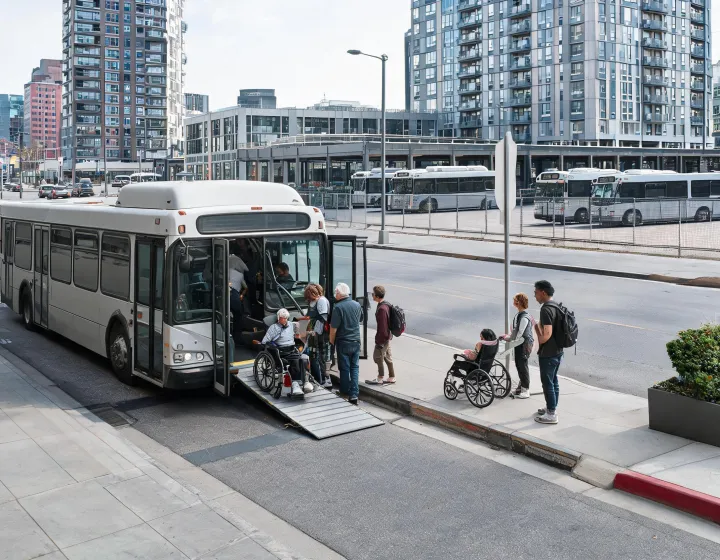
Match the city bus to the operating profile
Fixed-route urban transit
Describe stop spacing, peak passenger flow, standing-capacity basis, boarding time, low-floor and wheelchair requirements, door arrangement, turning environment, road grade, climate, HVAC demand, daily distance, and layover time. Ask how the proposed body, wheelbase, powertrain, GVWR, and energy specification respond to those inputs.
Campus, airport, and facility circulation
Record restricted roads, terminal clearances, curb height, luggage space, service frequency, pedestrian interaction, noise goals, indoor or covered-area operation, and charging or fueling windows. Avoid assuming that a general transit configuration fits site geometry or the desired passenger turnover.
Fleet replacement and mixed procurement
Identify which existing interfaces must remain compatible, what driver or maintenance changes are acceptable, how quantities divide by configuration, and whether staged delivery is required. Compare training, tools, spares documentation, inspection, inland transport, freight, and destination work separately from unit price.
Application-to-quotation ledger
These fields turn an operating description into an auditable comparison. Values shown by a manufacturer remain proposal-specific until exact-model evidence is reviewed.
| Operating question | RFQ basis | Verification path |
|---|---|---|
| How many passengers and mobility devices? | Seated, standing, wheelchair positions and luggage basis | Dimensioned floor plan and capacity calculation basis |
| What limits vehicle geometry? | Overall dimensions, wheelbase, turning need, doors and curb interface | Quoted-model drawing and buyer route review |
| What duty affects energy use? | Distance, load, speed, grade, climate, HVAC, dwell and recovery time | Range-test basis plus a stated duty-cycle assessment |
| What does the depot support? | Fuel type or connector, AC/DC power, charging window and service access | Infrastructure requirements and interface documentation |
| What reaches the destination? | Quantity, Incoterm, inspection, packing, freight and document set | Itemized quotation and logistics responsibility matrix |
Selection boundaries
Maximum passenger or range figures may depend on configuration and test conditions. Electric route performance can change with HVAC, grade, load and climate. A destination may require review beyond manufacturer documentation. Used buses require VIN-level condition evidence. Landed procurement cost cannot be inferred from a factory unit price alone.
Evidence questions for route fit
Keep the operating assumptions alongside the proposed vehicle so a change in either one triggers a new review.
Is a family maximum enough for passenger planning?
No. Ask for the capacity and GVWR basis of the actual seating, standing, accessibility, HVAC, battery or fuel, and option configuration being quoted.
Can a test-cycle range be used as a route commitment?
No. The test cycle is a reference, not a guarantee for a specific service. Record usable battery capacity, connector, charging power, ambient conditions, load, topography, HVAC, speed, and recovery time before assessing fit.
What should be reviewed for destination readiness?
Request exact-model and model-year materials, then confirm regulatory, import, registration, inspection, and operating requirements with qualified destination-side parties. CityTransit Desk does not issue approvals.
Turn the route and depot into a supplier-ready city bus brief
Include passenger flow, accessibility, operating cycle, powertrain preference, quantity, destination, delivery window, and document expectations.